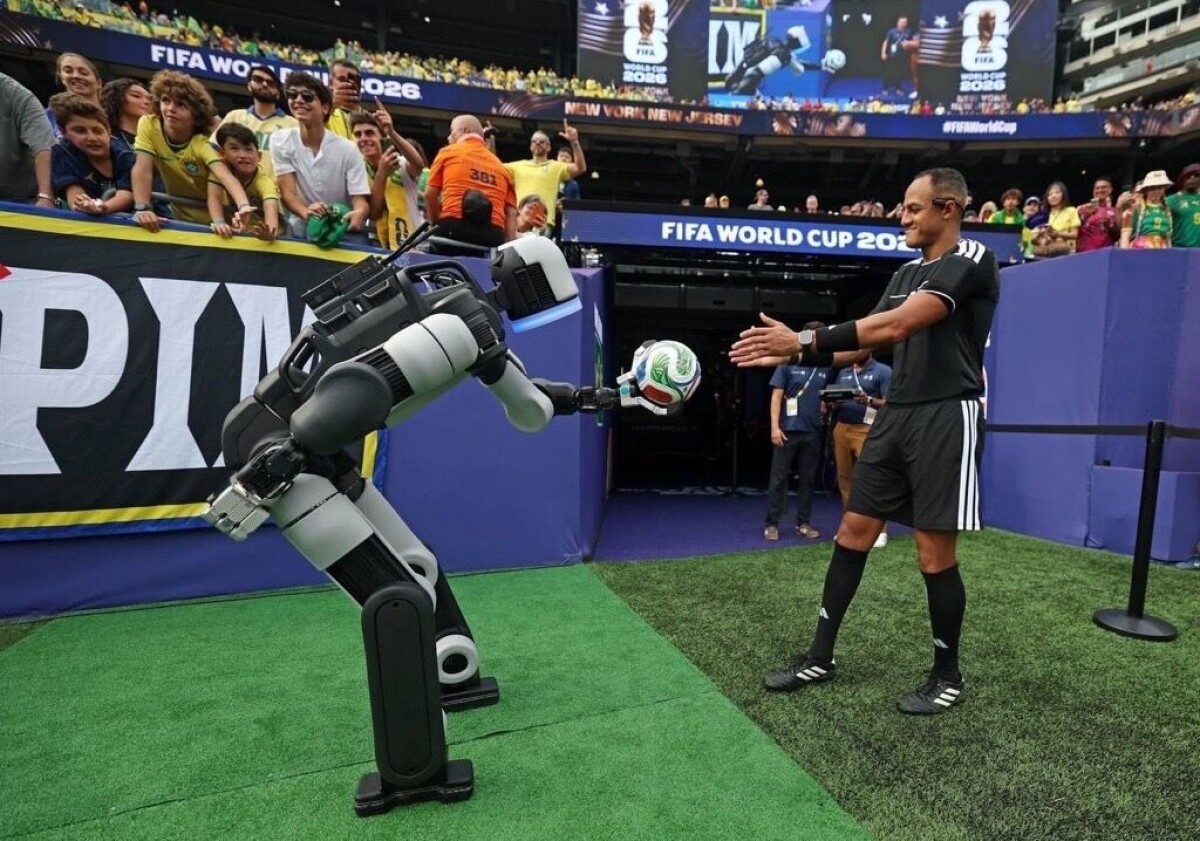
At halftime of the Round of 16 match between Norway and Brazil at New York/New Jersey Stadium on July 5 2026, something walked out of the players' tunnel that had never appeared at a FIFA World Cup before.
It was not a musician. It was not a celebrity. It was a six-foot humanoid robot named Atlas, built by Boston Dynamics and owned by Hyundai Motor Company. In front of 80,000 people inside the stadium and a global television audience, Atlas walked onto the pitch, performed goal celebrations in the style of Erling Haaland, Harry Kane, Matheus Cunha and Son Heung-min, then picked up the ceremonial match ball and carried it to the referee to start the second half.
It was the first time a humanoid robot had ever performed in a live FIFA World Cup match environment. And it was five years in the making.
|
Who Is Atlas?
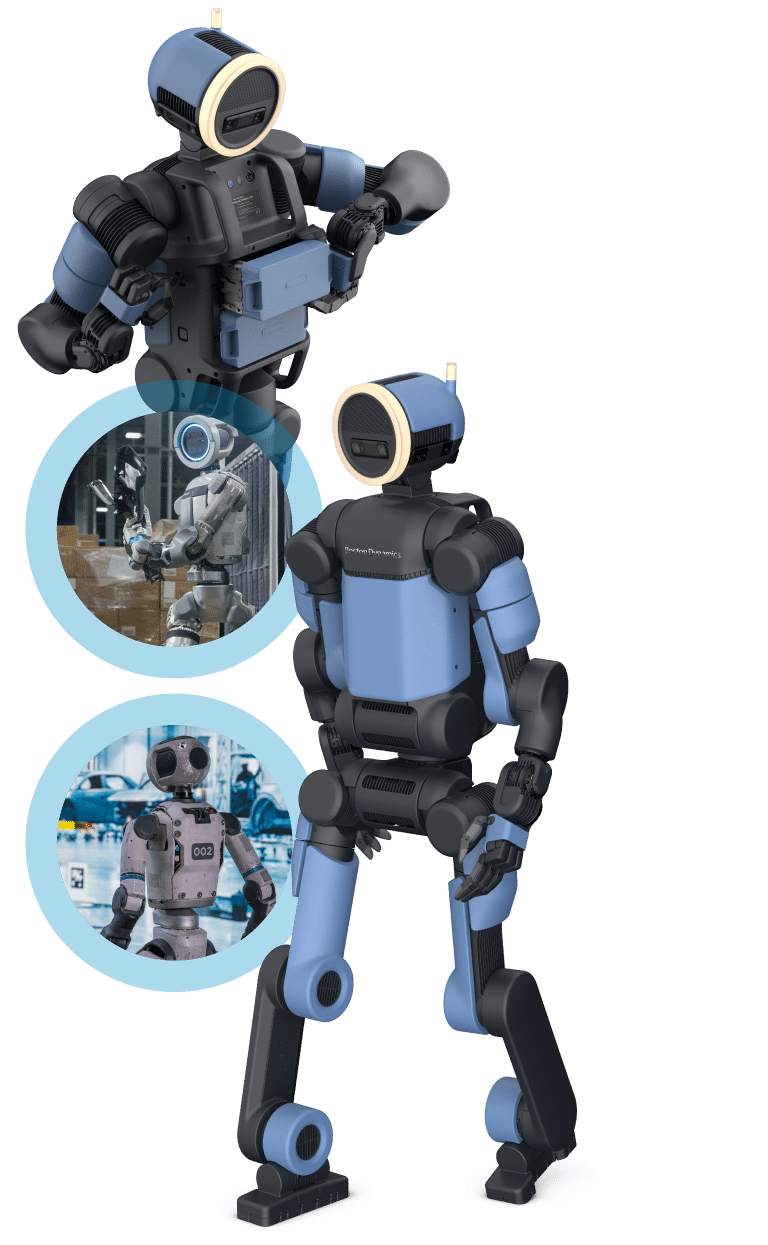
Atlas is a fully electric humanoid robot built by Boston Dynamics, the Massachusetts-based robotics company that Hyundai Motor Group acquired in 2021. The version that appeared at the World Cup is the production model first unveiled at CES 2026, a significant step forward from the hydraulic-powered research prototype that became famous for its backflips on YouTube.
The production Atlas stands roughly six feet tall and is designed for dynamic real-world environments, not controlled lab settings. The World Cup appearance was its most demanding real-world test to date: a packed stadium, a grass pitch, artificial lighting, crowd noise above 80 decibels and a live global broadcast where any failure would be seen by hundreds of millions of people.
|
How Atlas Learned to Play Football
Before Atlas ever touched a ball it watched film. The preparation process involved three distinct stages, all verified by the Boston Dynamics engineering team in their briefing to Fortune:
• Stage 1: Film study. Atlas was shown footage of professional footballers performing drills, celebrations and movements, studying the mechanics of the sport the way a player might review game tape.
• Stage 2: Motion capture. Human motion-capture data was collected including recordings of Boston Dynamics' own engineers physically running through the same moves in suits. That data was fed into a physics-based simulation.
• Stage 3: Simulation at scale. Atlas then ran through the same movements millions of times in parallel across cloud GPUs, learning to adapt to imperfect conditions until each movement held up reliably. What would take a human athlete roughly a year of physical trial and error, Atlas worked through in approximately 24 hours.
One challenge stood out above the rest. Grass.
"Grass has that interesting property where sometimes you slip but sometimes your feet can get caught on it." Boston Dynamics Engineer, as reported by Fortune |
Getting Atlas to walk and perform on a grass pitch required specific training that had never come up in factory or laboratory settings. Robots are typically trained on flat hard surfaces. A FIFA World Cup pitch is neither.
The Technology Powering the Performance
Three core capabilities made the halftime performance possible, confirmed in Hyundai's official press release:
Technology | What It Does |
Retargeting Technology | Translates and adapts human movements to Atlas's robotic body structure. The same motion a human player makes can be mapped onto a robot with a completely different physical form and still look natural and fluid. |
Reinforcement Learning | Uses thousands of simulated attempts to train and refine movements before real-world deployment. Atlas does not memorise a fixed routine. It learns to adapt movements to whatever conditions it encounters. |
Whole-Body Control | Coordinates movement across the robot's entire body simultaneously, from feet to arms to head, enabling fluid balanced motion rather than stiff mechanical sequences. |
What Happened on the Pitch: Minute by Minute
At halftime, with 80,000 fans watching inside New York/New Jersey Stadium, Atlas emerged from the players' tunnel carrying the ceremonial match ball. The robot walked unaided onto the pitch and performed a choreographed sequence of football-inspired goal celebrations:
• Erling Haaland's arms-wide goal celebration
• Harry Kane's signature routine
• Matheus Cunha's celebration
• Son Heung-min's routine
After completing the sequence Atlas gave a slight bow, then walked toward the referee and delivered the match ball to signal the start of the second half. The performance completed without incident.
|
|
Why This Moment Matters Beyond Football
The World Cup appearance was not a publicity stunt. It was a proof of concept that the robotics industry has been building toward for decades: a humanoid robot operating reliably in a genuinely uncontrolled real-world environment, under live pressure, without failure.
Every previous major Atlas demonstration had taken place in a controlled setting. A lab, a warehouse, a demonstration floor. The World Cup was different in every way that matters: unpredictable grass surface, stadium lighting, extreme crowd noise, a live broadcast reaching hundreds of millions of viewers and no margin for error.
Atlas performed without incident. For the robotics industry that is the actual headline, not the celebrations.
"The future isn't something we imagine. It starts now." Sungwon Jee, Hyundai Motor Company |
What This Means for African Businesses
Humanoid robots are no longer a research project. They are a production technology being demonstrated at the world's most watched events. The same reinforcement learning and whole-body control systems that made Atlas perform at the World Cup are being applied to warehouse logistics, healthcare, construction and manufacturing worldwide.
For African businesses the question is not whether robotics will arrive on the continent. It is whether local businesses will be ready to integrate with these systems when they do. The infrastructure for that integration is software: APIs, dashboards, data pipelines and the teams who know how to build them.
At Waveron Technologies we build the software that helps African businesses operate smarter today and prepare for what comes next. The robots are coming. The software needs to be ready.
We build software that prepares African businesses for what comes next. info@waverontechnologies.co.ke | waverontechnologies.co.ke | Nairobi Kenya Innovation's Crest. Tomorrow's Best. |

Comments (0)
No comments yet. Be the first to share your thoughts!